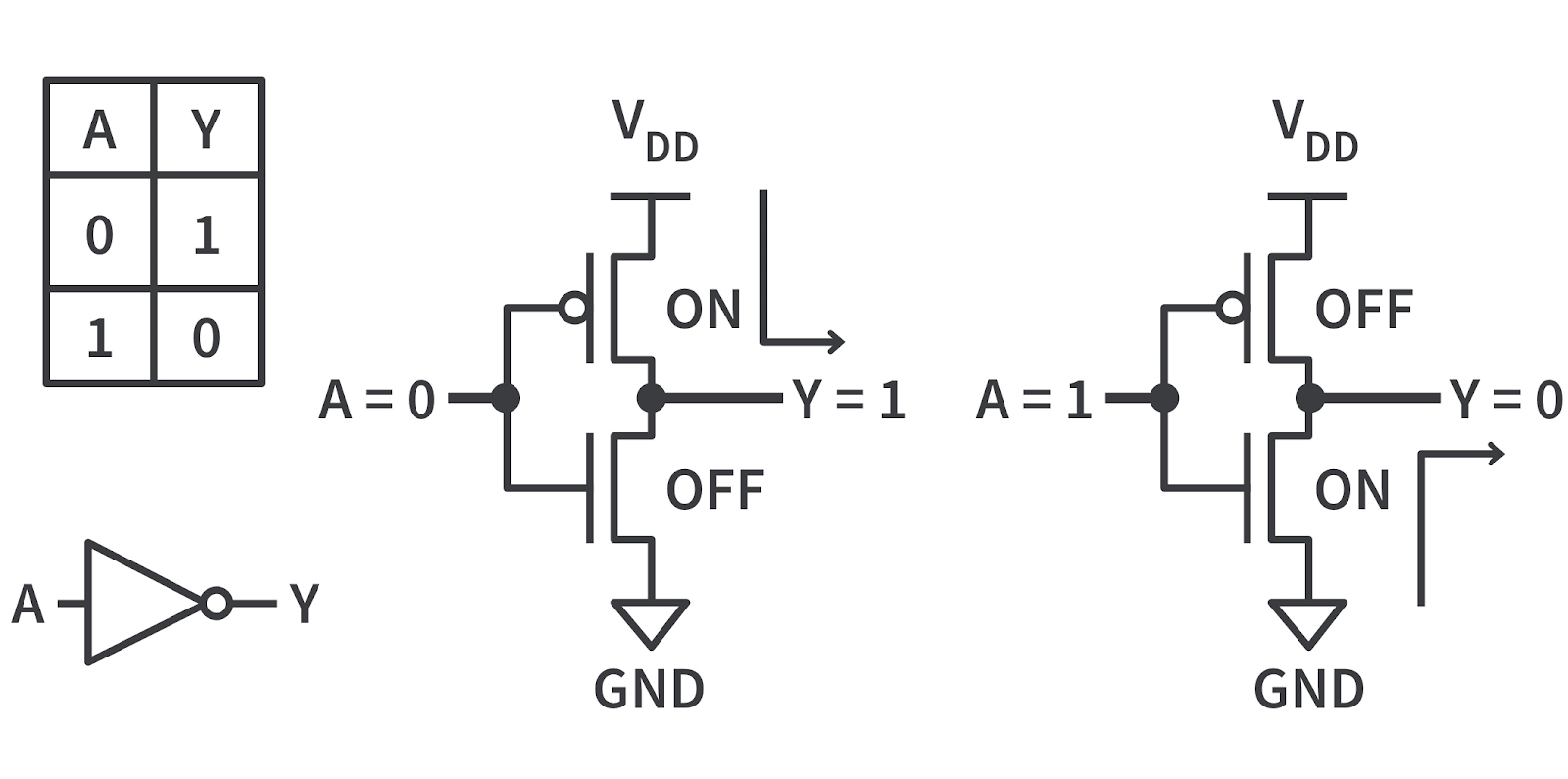
NOT Gate
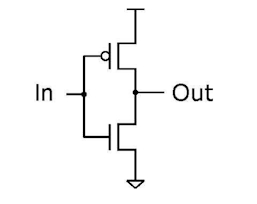

OR Gate
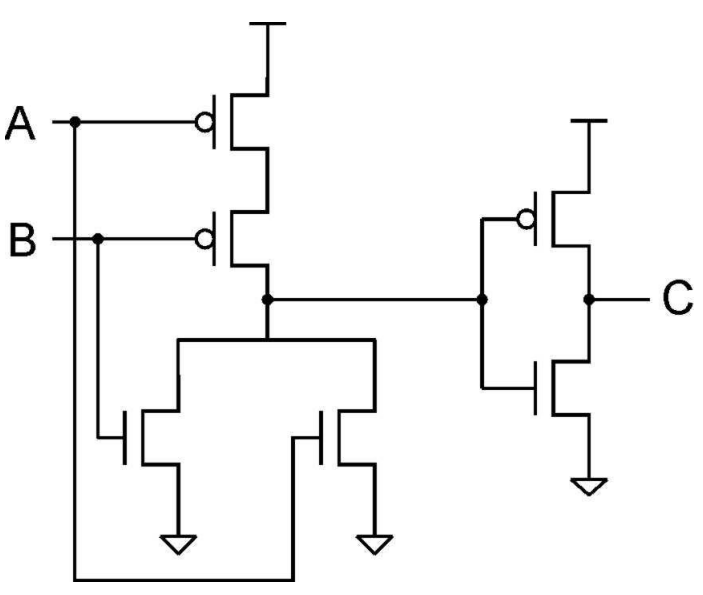
NAND Gate

NOR Gate

To add a half cycle delay between the two clock domain mixing in the data path or scan path to hold the data for half cycle to avoid hold violation.
Usually Negedge D-Latch is used as Lockup Latch.
Clock Divider is also called as Frequency Divider. Clock divider is a circuit, it takes a input (e.g. 100 MHz) and produce a output (e.g. 50 MHz) with lower frequency. It is used to generate different clock frequencies for different parts in the digital design.
Advantages:
1. Reduce the power consumption, in terms of slower clock.
2. Facilitate the testing and debugging, in terms of slowing down the clock.
Types:
Divided by 2 Clock Divider, Divided by 3 Clock Divider, Divided by 4 Clock Divider, and etc.


Clock gaters are used to reduce the power consumption, it is a technique/methodology to turn off the clock to certain parts of the digital design when not needed.
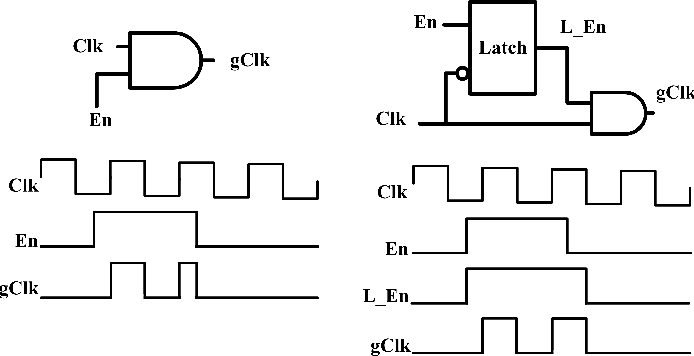
Simple AND gate may used as clock gater. But it has some limitation, that is it will create glitches.
Hence, the circuit with Negedge Latch and AND gate is used as clock gater.
CMOS - Complementary Metal Oxide Semiconductor
CMOS is a semiconductor technology used in most of the IC's. CMOS transistors are based on metal oxide semiconductor field effect transistor (MOSFET) technology.
CMOS circuits use a combination of p-type and n-type metal–oxide–semiconductor field-effect transistor (MOSFETs) to implement logic gates and other digital circuits.
MOSFET - Metal Oxide Semiconductor Field Effect Transistor.
MOSFET is a type of transistor used in electronic circuits for switching and amplification. It consist of metal gate electrode separated from the semiconductor channel by a thin layer of oxide, when voltage is appiled to the gate an electric field is created which controls the flow of current through the channel between the source and drain.

Source is connected to ground.
Drain is connected to load.
Gate is connected to input.
There are two main types of MOSFETs:
N-channel MOSFET (NMOS): In an NMOS transistor, the semiconductor channel is made of n-type material (electron-rich). The gate voltage controls the flow of electrons from the source to the drain. When a positive voltage is applied to the gate with respect to the source, it creates an electric field that attracts electrons, forming a conductive channel between the source and drain, allowing current to flow.
P-channel MOSFET (PMOS): In a PMOS transistor, the semiconductor channel is made of p-type material (hole-rich). The gate voltage controls the flow of holes from the source to the drain. When a negative voltage is applied to the gate with respect to the source, it creates an electric field that attracts holes, forming a conductive channel between the source and drain, allowing current to flow.
A transistor is a semiconductor device used to amplify or switch electrical signals and power. It is one of the basic building blocks of modern electronics.
It has three terminals, namely Collector, Base, Emitter.